
Introduction
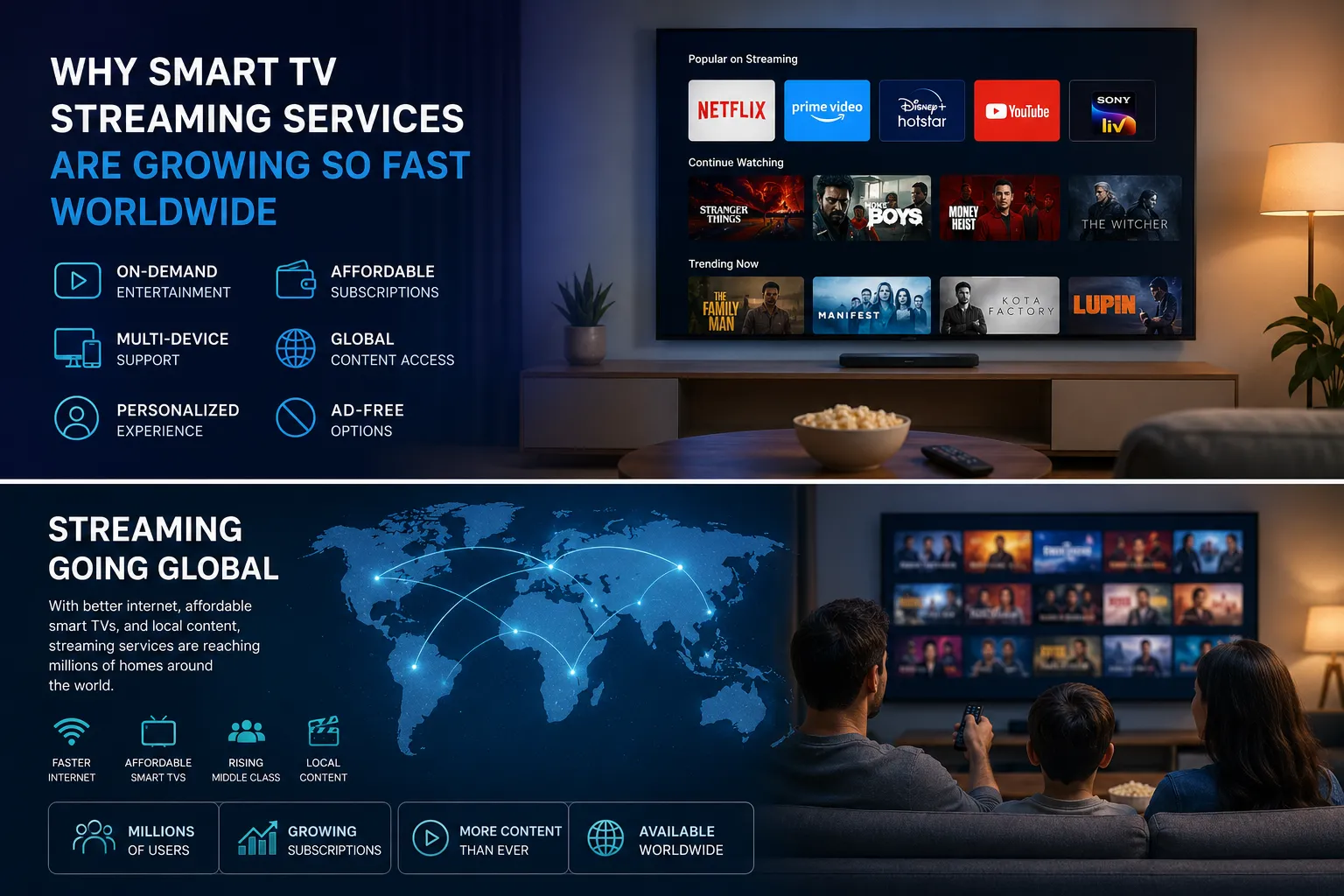
The streaming industry has changed quickly in recent years. Audiences no longer want fixed TV schedules or traditional cable services. Instead, they expect immediate access to live channels, on-demand shows, and smooth viewing across smartphones, smart TVs, tablets, and laptops.
As streaming audiences continue to grow worldwide, platforms face increasing pressure to deliver high-quality video without buffering, lag, or downtime. Modern users expect smooth playback regardless of their device, location, or internet speed. This growing demand has pushed streaming providers to adopt more advanced infrastructure solutions capable of handling massive traffic volumes and global content delivery.
This is where cloud-based systems have transformed the streaming industry. Cloud technology enables streaming platforms to scale quickly, improve performance, optimize storage, and provide reliable viewing experiences for millions of users simultaneously.
Today, cloud infrastructure powers many of the world’s largest streaming services because it offers flexibility, scalability, and efficiency that traditional systems cannot easily match.
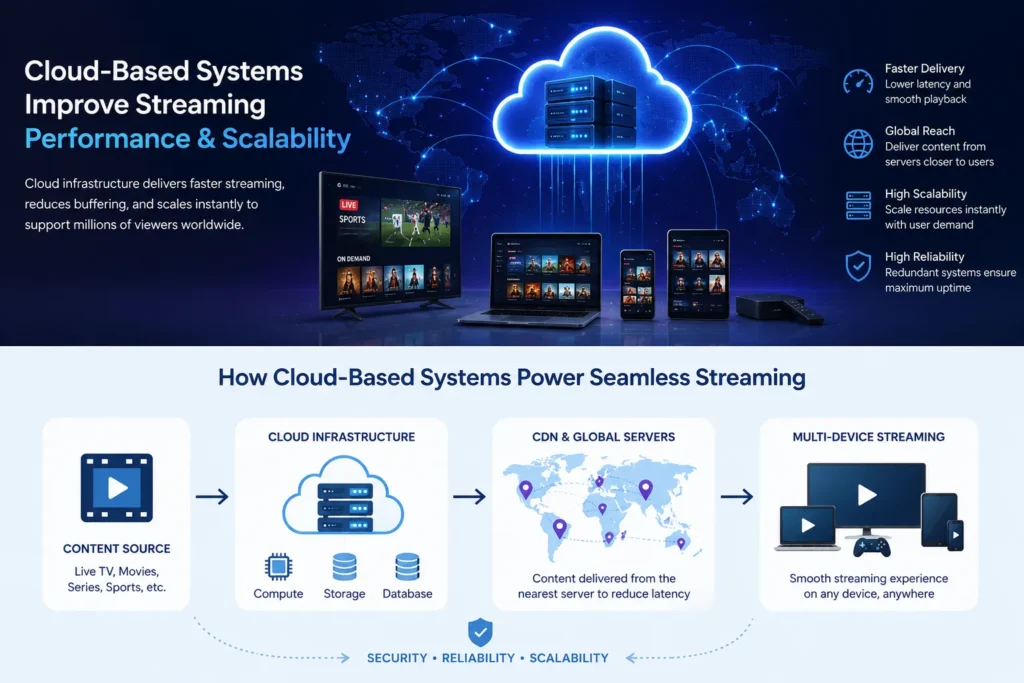
What Are Cloud-Based Streaming Systems?
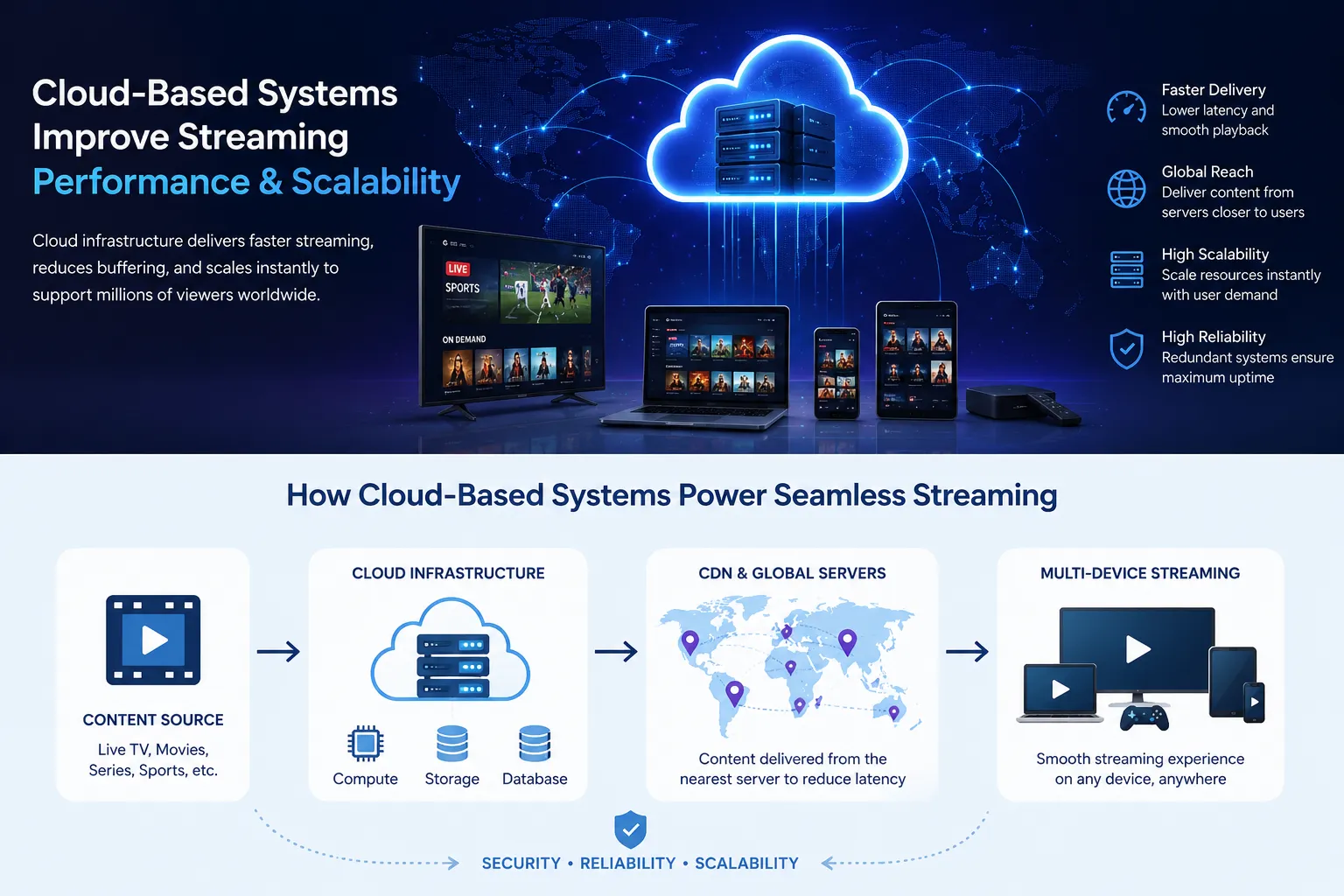
Cloud-based streaming platforms rely on remote servers and a distributed network to handle, store, and deliver streaming content via the internet. Rather than relying solely on physical hardware in one data center, cloud systems spread workloads across various servers and regions.
This modern approach allows streaming platforms to operate more efficiently while supporting large numbers of concurrent users worldwide. Because resources can be adjusted dynamically, streaming services can maintain stable performance even during periods of extremely high demand.
Why Scalability Matters in Streaming Services
Scalability is one of the most important factors for any modern streaming platform. User traffic can change dramatically depending on trending shows, sports events, live broadcasts, or new content releases.
A platform that normally serves thousands of viewers may suddenly need to support millions of users during a major event. Traditional infrastructure often struggles to adapt quickly to these traffic spikes.
Cloud-based systems solve this problem through elastic scalability. Resources such as bandwidth, computing power, and storage can automatically increase or decrease depending on user demand.
Traditional Infrastructure vs Cloud Infrastructure
| Traditional Systems | Cloud-Based Systems |
|---|---|
| Limited scalability | Dynamic scaling |
| High hardware costs | Flexible pricing |
| Slow deployment | Fast global expansion |
| Risk of server overload | Automated load balancing |
| Manual maintenance | Centralized cloud management |
This flexibility allows streaming businesses to avoid unnecessary infrastructure costs while maintaining excellent viewing performance.
How Cloud-Based Systems Improve Streaming Performance
Streaming performance directly impacts user satisfaction. If videos buffer frequently or streams fail during live events, viewers often leave the platform quickly.
Cloud technology improves streaming performance in several important ways.
Faster Content Delivery
Cloud-based systems use globally distributed servers and content delivery networks (CDNs) to deliver content from locations closer to users.
When someone watches a video, the content is delivered from the nearest available server instead of a distant central location. This reduces latency and improves playback speed.
As a result, users experience faster video loading, reduced buffering, lower latency, and better playback stability, creating a smoother and more reliable streaming experience across different devices and internet connections.
This is especially important for international streaming services with audiences across multiple countries.
Adaptive Video Streaming
Internet quality varies significantly between users and devices. Cloud systems support adaptive bitrate streaming, which automatically adjusts video quality based on available internet speed.
If a user’s connection becomes slower, the platform temporarily lowers video quality to prevent interruptions. When the connection improves, higher resolutions are restored automatically.
This technology helps provide smooth viewing experiences even on unstable internet connections.
Better Performance During High-Traffic Events
Major sports matches, concerts, or live broadcasts can generate huge traffic spikes within minutes.
Cloud infrastructure uses load balancing technology to distribute user requests across multiple servers. Instead of overwhelming a single server, traffic is shared intelligently across the network.
This prevents crashes and helps maintain stable streaming quality during peak viewing periods.
Reduced Downtime and Higher Reliability
Downtime can seriously damage a streaming platform’s reputation. Cloud systems improve reliability through redundancy and automated failover mechanisms.
If one server or region experiences issues, traffic is automatically redirected to another available location. This ensures continuous service availability with minimal disruption.
Reliable infrastructure is especially important for streaming platforms that deliver live TV, sports broadcasts, premium subscription content, and global entertainment services. These platforms must maintain stable performance, minimize downtime, and ensure smooth playback for large audiences watching simultaneously across different regions and devices.
The Importance of Cloud Storage in Streaming
Streaming platforms manage enormous amounts of media content every day. High-resolution videos, subtitles, metadata, thumbnails, and user information all require scalable storage solutions.
Cloud storage allows platforms to store large content libraries without relying on expensive local hardware.
Benefits of Cloud Storage
Flexible Media Storage
Streaming platforms can increase storage capacity whenever needed without purchasing additional physical infrastructure.
Faster Content Access
Cloud environments enable faster media retrieval and content processing.
Improved Disaster Recovery
Data backups can be stored across multiple geographic locations, reducing the risk of permanent data loss.
Easier Collaboration
Teams working remotely can access cloud-based content libraries from anywhere.
These advantages help streaming services operate more efficiently while improving content availability.
Traditional Infrastructure vs Cloud-Based Streaming Infrastructure
As streaming platforms continue growing, infrastructure plays a major role in determining performance, scalability, reliability, and operational costs. Traditional server setups often struggle to handle sudden traffic spikes, global content delivery, and modern multi-device streaming demands. In contrast, cloud-based infrastructure offers flexible scalability, faster deployment, and improved streaming performance for modern IPTV and streaming platforms.
The table below highlights the key differences between traditional streaming infrastructure and modern cloud-powered systems.
| Feature | Traditional Infrastructure | Cloud-Based Infrastructure |
|---|---|---|
| Scalability | Limited | Highly Flexible |
| Performance | Slower During High Traffic | Stable & Optimized |
| Storage | Fixed Physical Storage | Expandable Cloud Storage |
| Cost | High Upfront Investment | Pay-as-you-go Pricing |
| Global Delivery | Difficult | Faster Worldwide Delivery |
| Downtime Risk | Higher | Lower with Failover Systems |
Global Expansion Through Cloud Technology
Expanding internationally used to require major investments in regional infrastructure and physical servers.
Cloud-based systems simplify global expansion by providing access to distributed data centers worldwide.
Streaming businesses can launch services in new markets much faster while maintaining reliable content delivery.
Advantages of Global Cloud Infrastructure
- Cloud technology allows streaming services to support worldwide audiences more effectively.
- Lower latency improves streaming speed and reduces buffering for viewers.
- Global server distribution helps deliver content efficiently across different regions.
- Faster market expansion allows streaming businesses to launch services quickly in new countries.
- Improved reliability ensures stable streaming performance and better user satisfaction.
- Flexible scaling helps platforms manage sudden traffic spikes more efficiently.
Security Benefits of Cloud-Based Streaming Systems
Security is a major concern for modern streaming platforms. Companies must protect user information, payment systems, and copyrighted content from cyber threats.
Cloud providers include advanced security tools designed to strengthen platform protection.
Common Cloud Security Features
- Data encryption
- Secure authentication
- DDoS protection
- Access management systems
- Real-time monitoring
- Automated software updates
These security measures help reduce vulnerabilities while improving platform reliability.
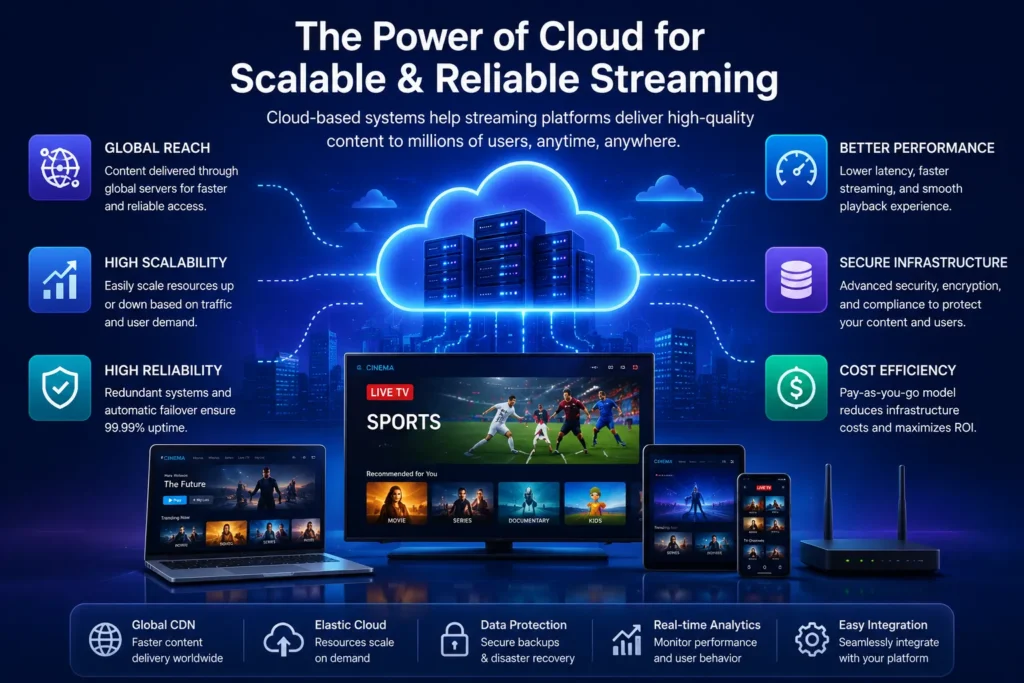
Cost Efficiency and Operational Flexibility
Traditional infrastructure often requires large upfront investments in servers, networking equipment, maintenance teams, and data centers.
Cloud systems offer more flexible pricing models based on actual resource usage.
This pay-as-you-go structure allows streaming companies to control costs more efficiently.
Financial Advantages of Cloud Infrastructure
Lower Initial Investment
Businesses can launch streaming services without purchasing expensive physical hardware.
Better Resource Optimization
Platforms only pay for the resources they actively use.
Easier Infrastructure Management
Cloud providers handle many maintenance and operational tasks automatically.
Faster Deployment
New services and features can be launched more quickly.
These advantages benefit both startups and large-scale streaming companies.
Artificial Intelligence and Cloud Streaming
Cloud infrastructure also supports artificial intelligence technologies that improve user experiences.
AI-powered systems analyze viewer behavior and platform performance to optimize streaming services.
AI enhances streaming platforms by delivering personalized content recommendations, improving search functionality, automating video optimization, analyzing user behavior, predicting traffic patterns, and organizing content more efficiently to create a smarter and more engaging viewing experience.
Cloud computing provides the large-scale processing power required for these advanced features.
The Future of Cloud-Based Streaming Services
The streaming industry will continue evolving rapidly in the coming years. Higher video resolutions, interactive entertainment, virtual reality experiences, and AI-driven personalization will increase infrastructure demands even further.
Cloud technology provides the scalability and flexibility needed to support these innovations.
Future developments may include:
- 8K streaming
- Interactive live events
- AI-powered recommendations
- Edge computing
- Faster global content delivery
- Serverless streaming infrastructure
Streaming businesses that invest in cloud-based systems today will be better prepared for future industry growth and changing viewer expectations.
Conclusion
Cloud-based systems have become essential for modern streaming services because they provide the scalability, flexibility, performance, and reliability required in today’s entertainment landscape.
By improving content delivery, reducing downtime, supporting multi-device viewing, and enabling global expansion, cloud technology helps streaming platforms deliver better experiences to users worldwide.
As streaming audiences continue growing, cloud infrastructure will remain one of the most important technologies driving the future of digital entertainment.
Businesses that adopt cloud-powered streaming solutions can improve operational efficiency, enhance viewer satisfaction, and scale more effectively in an increasingly competitive market.
Frequently Asked Questions (FAQs)
A cloud-based streaming system uses remote cloud servers and distributed infrastructure to store, process, and deliver streaming content over the internet.
Cloud systems improve performance by reducing buffering, enabling faster content delivery, supporting adaptive streaming, and balancing traffic across multiple servers.
Scalability allows streaming services to handle sudden increases in viewers during live events, trending content releases, or peak traffic periods without affecting performance.
Cloud storage provides flexible media storage, faster content access, easier disaster recovery, and improved collaboration for streaming businesses.
Yes. Cloud systems reduce upfront hardware investments and offer flexible pay-as-you-go pricing models that help businesses optimize operational costs.
Yes. Cloud providers operate worldwide data centers that help streaming platforms deliver content efficiently across multiple regions and countries.
Ready to Build a Faster and More Scalable Streaming Platform?
Purple Smart helps streaming businesses deliver smoother playback, reduce buffering, support global audiences, and scale efficiently with modern cloud-based infrastructure.
Whether you’re launching a new IPTV platform or upgrading your existing streaming system, cloud-powered solutions can improve performance, reliability, and viewer satisfaction.
Explore Purple Smart today: https://purplesmart.app