Why Smart TV Streaming Services Are Growing So Fast Worldwide
Traditional cable subscriptions keep falling while connected television keeps climbing. The reasons are structural, not seasonal.
The television became the computer
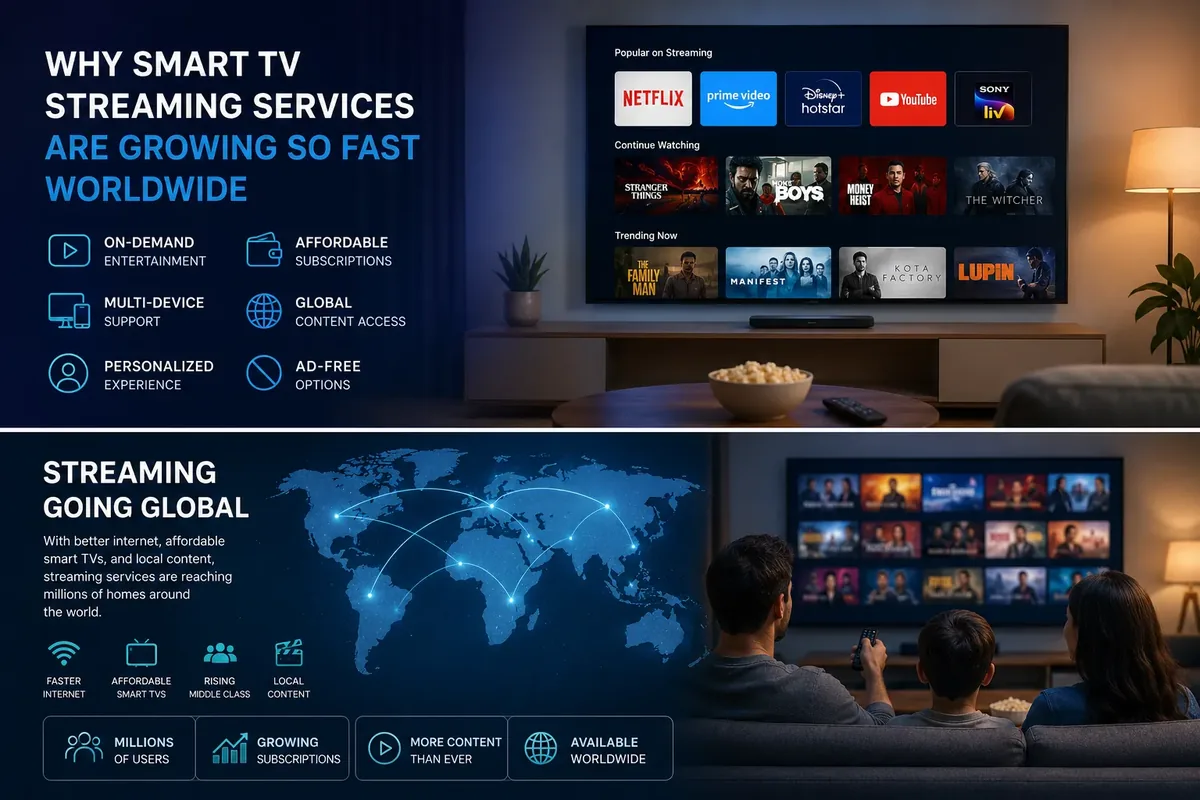
Virtually every television sold today ships with an application platform built in. The extra box that streaming once required has been absorbed into the screen itself, and that removed the single biggest barrier to adoption.
For operators it means the addressable market is now every new television rather than every customer willing to buy and configure additional hardware.
Viewers rejected the schedule
Fixed programming times made sense when distribution was scarce. With on-demand access universally available, the expectation has inverted: content should be there when the viewer is, not the other way round.
Services that offer catch-up, on-demand libraries and resume across devices match that expectation and win the comparison against fixed schedules automatically.
Bandwidth stopped being the constraint
Broadband capable of comfortable high-definition streaming is now the default in most markets, and mobile networks have closed much of the remaining gap.
As the network stopped being the limiting factor, the quality of the player application became the thing that differentiates one service from another.
What this means for operators
Growth is concentrated on connected televisions, so the operators capturing it are the ones present natively on those screens rather than only on mobile.
A branded player across Android TV, Fire TV, Apple TV and Tizen covers the overwhelming majority of connected households, and that coverage is increasingly the price of entry.