How Cloud-Based Systems Improve Streaming Performance and Scalability
Audiences expect instant playback on any device at any hour. Cloud delivery is what makes that economically possible for operators of every size.
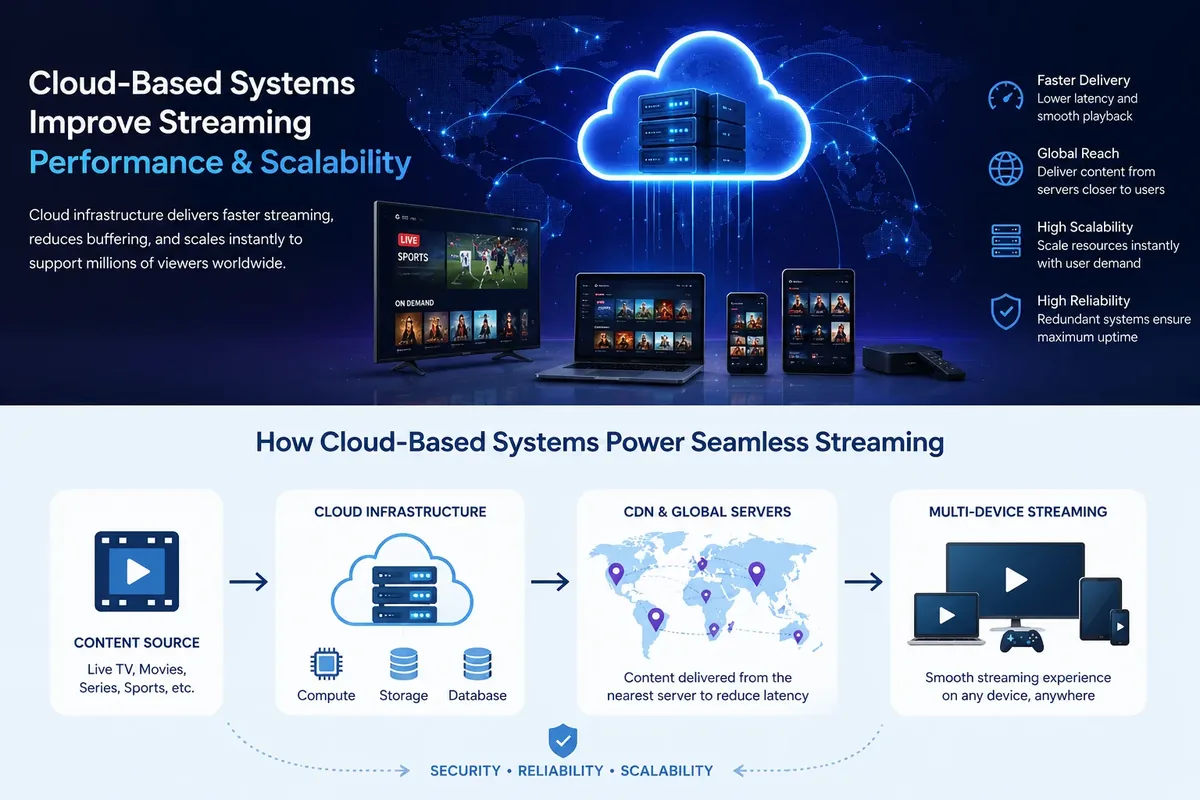
Demand is spiky, and fixed capacity is the wrong shape
Streaming load is not flat. Evening peaks, weekends and live events can produce several times the average concurrent viewership within minutes.
Provisioning fixed hardware for the peak means paying for idle capacity all day. Provisioning for the average means failing precisely when the audience is largest.
Edge delivery shortens the distance
A content delivery network caches segments close to the viewer, so playback starts from a nearby node rather than a distant origin. Latency drops, buffering drops, and origin bandwidth costs drop with them.
For live content the same architecture absorbs regional surges without any change to the origin infrastructure.
Redundancy that customers never notice
Running across multiple regions means a single failure degrades rather than destroys the service. Health checks route traffic away from unhealthy nodes before viewers see an error.
Multi-DNS support in the client application is the last piece: it lets you move infrastructure without shipping a new build to every installed device.
Measure what viewers feel
Server CPU is a poor proxy for experience. Track startup time, rebuffer ratio and playback failure rate, because those are the numbers that correspond to what a customer would describe as the service being good or bad.