
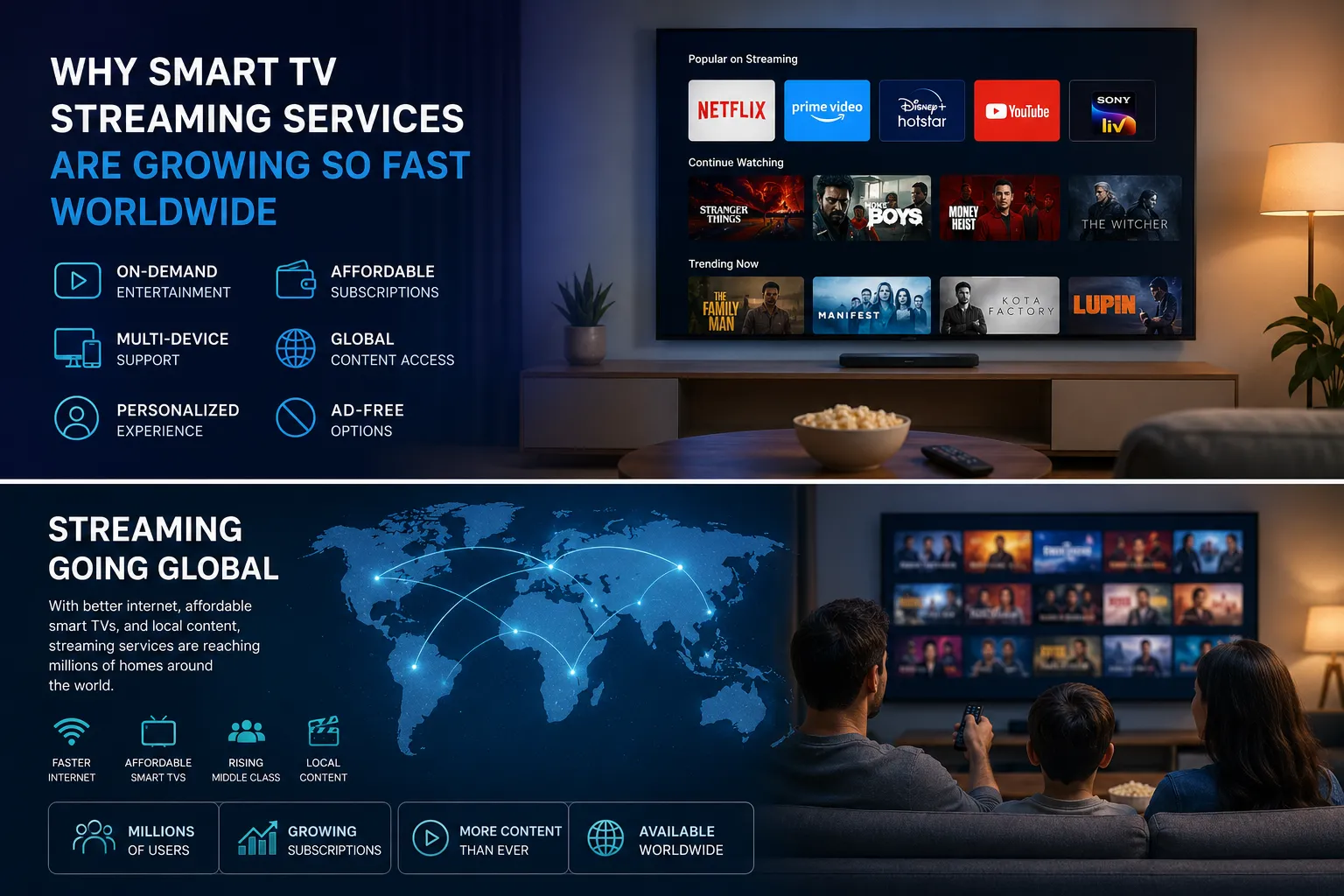
The way people watch television has changed dramatically over the last decade. Traditional cable subscriptions are declining, while smart TV streaming services are becoming the preferred choice for millions of users worldwide. From on-demand entertainment and live sports to personalized viewing experiences, streaming platforms are reshaping the future of digital entertainment.
Today, smart TVs are no longer considered luxury devices. They have become standard household technology in many countries, allowing users to access streaming apps directly without additional hardware. As internet connectivity improves and content libraries expand, the growth of streaming services continues to accelerate across global markets.
In this article, we will explore the major reasons why smart TV streaming services are growing so fast worldwide, how consumer behavior is changing, and what the future of streaming entertainment looks like.
The Rise of Smart TVs in Modern Homes
Smart TVs have transformed the way people consume content. Unlike traditional televisions, smart TVs come with built-in internet connectivity and support for popular streaming applications such as Netflix, YouTube, Disney+, Prime Video, and many others.
Consumers no longer need satellite dishes or expensive cable boxes to enjoy entertainment. With a stable internet connection, viewers can instantly access movies, TV shows, sports, documentaries, and live channels from anywhere.
One of the biggest reasons for the rapid adoption of smart TVs is affordability. Earlier, smart televisions were expensive and limited to premium buyers. Today, multiple brands offer budget-friendly smart TVs with advanced features such as 4K resolution, voice assistants, HDR support, and app integration.
This accessibility has helped streaming services reach a much larger audience worldwide.
Why Streaming Services Are Becoming More Popular
Streaming services provide flexibility that traditional television cannot match. Users can watch what they want, when they want, and on the device of their choice.
Here are some of the biggest factors driving this global growth:
| Factor | Impact on Users |
|---|---|
| On-demand content | Watch anytime without schedules |
| Affordable subscriptions | Lower cost than cable TV |
| Multi-device support | Stream on TV, phone, tablet, or laptop |
| Personalized recommendations | Better user experience |
| Global content access | International movies and shows |
| Ad-free viewing options | Improved entertainment experience |
These benefits are changing user expectations worldwide. People now prefer convenience and control over rigid broadcasting schedules.
Faster Internet Has Changed Everything
The expansion of high-speed internet is one of the main reasons behind the streaming boom. In many countries, fiber broadband and 5G networks are making high-quality streaming more accessible than ever before.
Years ago, buffering issues and slow internet speeds limited streaming adoption. Today, users can stream 4K and even 8K content smoothly on smart TVs with minimal interruptions.
Mobile internet has also contributed significantly to streaming growth in developing markets. Affordable data plans allow users to access streaming content without depending entirely on home broadband connections.
As internet infrastructure continues improving globally, streaming platforms are expected to gain even more users in the coming years.
Consumers Prefer On-Demand Entertainment
Traditional television follows fixed broadcasting schedules. If viewers miss a program, they often have to wait for reruns. Streaming services completely eliminate this limitation.
Modern consumers value convenience more than ever. They want the freedom to pause, rewind, skip episodes, or binge-watch entire seasons in one sitting.
This shift in viewing habits has especially influenced younger audiences, who grew up with digital technology and mobile content consumption.
Streaming platforms also allow viewers to create watchlists, receive personalized recommendations, and discover new content based on viewing history. These features make entertainment more engaging and user-friendly.
Smart TV Apps Make Streaming Easy
One major reason behind the success of streaming services is ease of use. Most smart TVs now come with pre-installed streaming applications and simple user interfaces.
Users can access entertainment platforms with just a few clicks using remote controls or voice commands. Smart TV operating systems such as Android TV, Google TV, webOS, and Tizen have simplified navigation significantly.
Popular features include:
- Voice search integration
- Personalized home screens
- Automatic app updates
- Cross-device synchronization
- Built-in casting support
This convenience encourages even non-technical users to adopt streaming services quickly.
Original Content Is Driving Massive Growth
Streaming companies are investing billions of dollars in original movies, TV series, documentaries, and live events.
Exclusive content has become one of the strongest competitive advantages in the streaming industry. Many users subscribe to platforms specifically to watch original shows that are unavailable elsewhere.
Successful original productions often become global trends overnight, attracting millions of new subscribers. This strategy has transformed streaming platforms from simple content distributors into major entertainment studios.
In addition, streaming services now produce regional and multilingual content to attract local audiences worldwide. This localization strategy has greatly increased global adoption.
Live Sports Streaming Is Expanding Rapidly
Sports broadcasting is another major growth driver for streaming services. Traditionally, live sports were dominated by cable and satellite television. However, streaming platforms are increasingly securing sports broadcasting rights.
Today, users can stream the following:
- Football matches
- Cricket tournaments
- UFC events
- Basketball games
- Formula 1 races
- Tennis championships
This shift is especially popular among younger viewers who prefer watching sports on smart TVs, smartphones, and tablets rather than traditional cable networks.
Streaming also offers additional features such as multiple camera angles, instant replays, live statistics, and interactive viewing experiences.
Global Streaming Demand Increased After the Pandemic
The COVID-19 pandemic accelerated streaming adoption worldwide. During lockdown periods, millions of people turned to digital entertainment while staying at home.
This period dramatically increased the following:
- Smart TV sales
- Streaming subscriptions
- Daily watch time
- Demand for online entertainment
Many users who adopted streaming services during the pandemic continued using them even after restrictions ended. This long-term behavioral change contributed heavily to the industry’s continued expansion.
Streaming companies also responded by increasing content production and improving platform features to retain subscribers.
Affordable Subscription Models Attract More Users
Compared to traditional cable television packages, streaming subscriptions are usually much more affordable.
Many services now offer:
| Subscription Feature | Benefit |
|---|---|
| Monthly plans | No long-term contracts |
| Family sharing | Multiple users on one account |
| Mobile-only plans | Lower pricing options |
| Free trials | Easy testing before purchase |
| Ad-supported plans | Reduced subscription cost |
This flexibility makes streaming services appealing across different income groups and regions.
Some platforms even provide entirely free streaming supported by advertisements, making digital entertainment accessible to almost everyone.
Smart TVs Support Better Viewing Quality
Modern smart TVs deliver significantly better picture and sound quality than older television systems.
Streaming services now support:
- 4K Ultra HD
- HDR content
- Dolby Vision
- Dolby Atmos audio
- AI upscaling technology
These improvements create a cinema-like experience at home, encouraging users to invest more in streaming ecosystems.
As display technology becomes more advanced and affordable, consumers increasingly prefer streaming platforms capable of delivering premium-quality entertainment.
Personalized Recommendations Improve User Experience
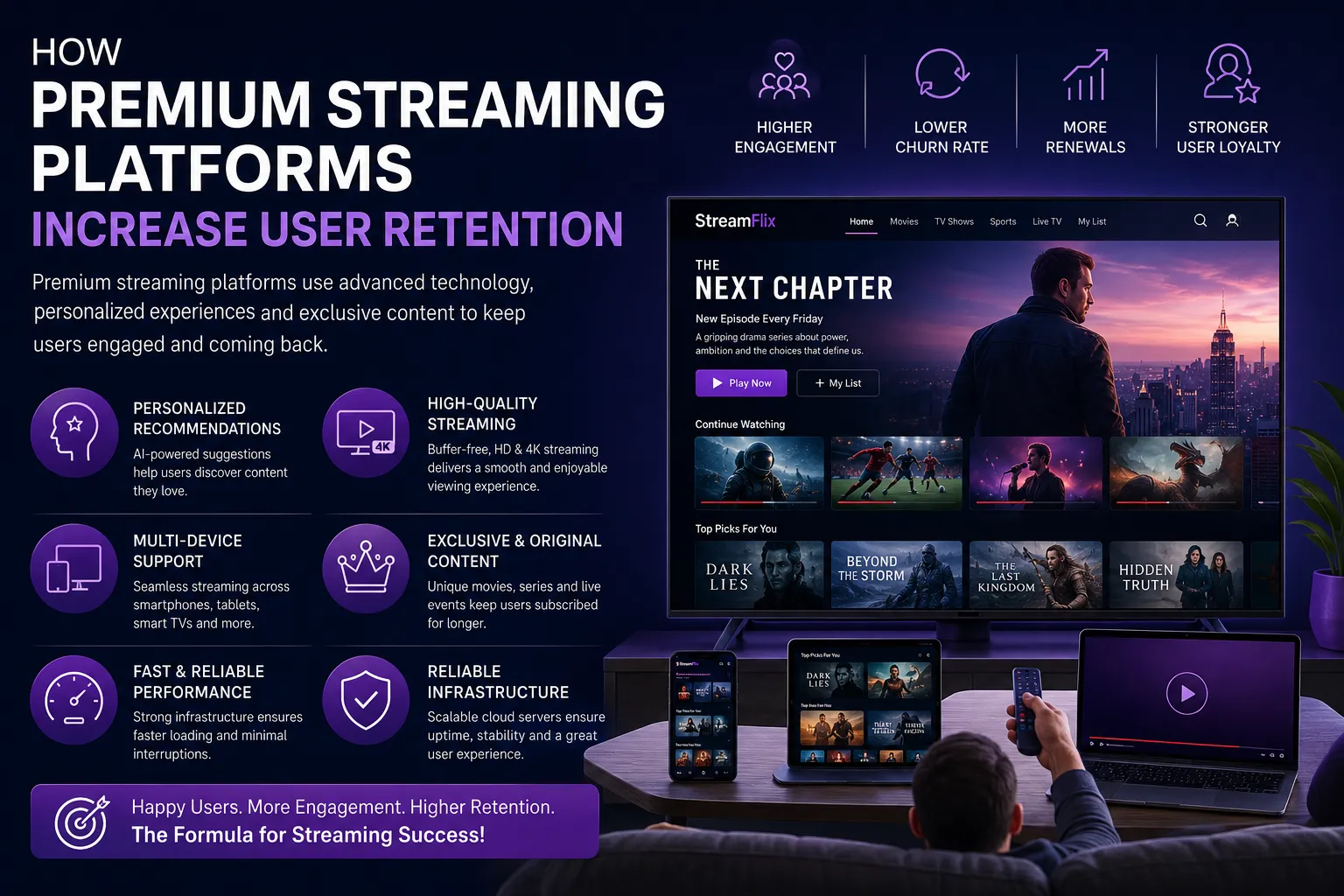
Streaming platforms use artificial intelligence and machine learning to analyze user behavior and suggest relevant content.
This personalization helps users discover movies and shows they are more likely to enjoy.
Unlike traditional TV channels, streaming services adapt to individual viewing habits. This creates a highly engaging and customized experience that keeps users active on the platform for longer periods.
Recommendation systems also improve user retention, which is one reason streaming companies continue growing rapidly.
Streaming Services Are Expanding Globally
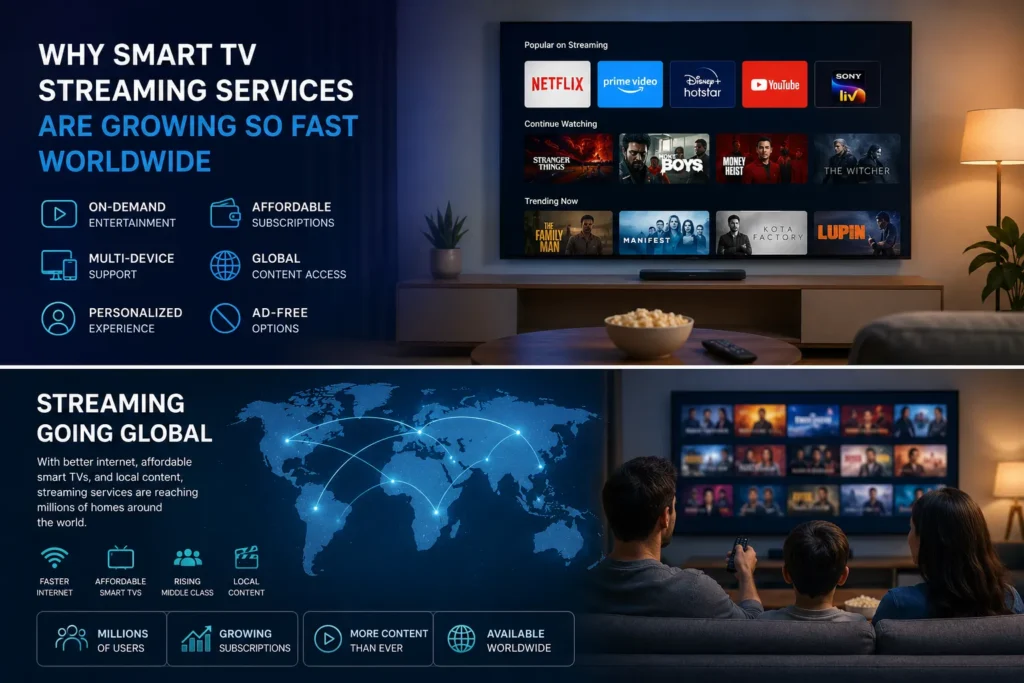
Streaming platforms are no longer focused only on North America or Europe. Companies are rapidly expanding into regions such as Asia, Africa, South America, and the Middle East as internet access and digital entertainment demand continue to grow worldwide. The increasing use of smartphones, expanding broadband infrastructure, and availability of affordable smart TVs have made streaming services accessible to millions of new users. At the same time, rising middle-class populations in developing countries are spending more on digital entertainment and premium viewing experiences.
Countries like India, Brazil, Indonesia, and Nigeria are becoming major streaming markets because of their massive internet user bases and growing demand for online content. Another major reason behind this expansion is the rise of local language content. Streaming companies are investing heavily in regional movies, TV shows, and original productions to connect better with local audiences. Regional streaming platforms are also growing successfully by offering localized content, affordable pricing plans, and culturally relevant entertainment tailored to specific markets.
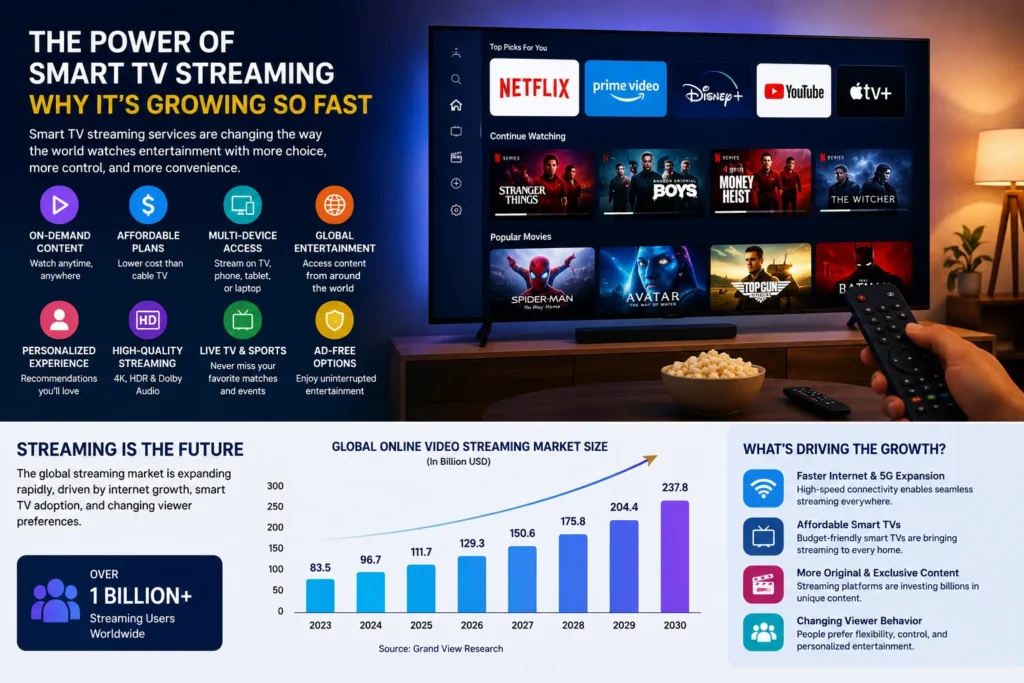
The Future of Smart TV Streaming Services
The streaming industry is expected to continue evolving rapidly over the next decade. Experts predict major innovations in areas such as:
AI-Powered Content Discovery
Streaming platforms will become even smarter in recommending personalized entertainment experiences.
Interactive Entertainment
Viewers may gain more control over stories, camera angles, and live experiences.
Cloud Gaming Integration
Many smart TVs are beginning to support cloud gaming services alongside video streaming.
Advanced Advertising Technology
Ad-supported streaming platforms will use smarter targeting systems for better user engagement.
Virtual Reality and Immersive Viewing
Future streaming experiences may combine VR technology with interactive digital entertainment.
As technology improves, streaming services will likely become the central hub for home entertainment worldwide.
Challenges Facing Streaming Services
Despite rapid growth, streaming companies still face several challenges.
Increasing Competition
The number of streaming platforms continues rising, making the market highly competitive.
Subscription Fatigue
Users may become overwhelmed by managing multiple subscriptions simultaneously.
Internet Dependency
Streaming quality still depends heavily on stable internet connectivity.
Content Licensing Costs
Producing and licensing premium content requires massive investments.
Even with these challenges, industry growth remains strong due to rising global demand for digital entertainment.
Final Thoughts
Smart TV streaming services are growing rapidly because they offer convenience, affordability, flexibility, and better entertainment experiences compared to traditional television systems.
Consumers now expect instant access to content, personalized recommendations, and the freedom to watch entertainment anytime on any device. Improvements in internet infrastructure, smart TV technology, and original content production continue driving this global transformation.
As streaming platforms expand internationally and technology becomes more advanced, smart TV streaming is expected to dominate the entertainment industry for years to come.
Businesses, content creators, and technology companies are all investing heavily in this evolving ecosystem because the future of entertainment is clearly moving toward connected, on-demand digital experiences.
FAQs
Smart TV streaming services offer flexible, on-demand entertainment at lower costs compared to traditional cable television.
No. Most streaming services only require a stable internet connection and a compatible smart TV or device.
Countries like India, Brazil, Indonesia, and several African markets are experiencing rapid streaming growth due to expanding internet access.
In many cases, yes. Streaming subscriptions are usually more affordable and provide more flexibility without long-term contracts.
Yes. Many streaming platforms now offer live sports coverage, including football, cricket, basketball, and other major events.
The future includes AI-powered recommendations, cloud gaming, immersive entertainment, and more personalized viewing experiences.
Ready to transform your entertainment experience?
Start streaming on your smart TV today and enjoy unlimited access to movies, live TV, sports, and on-demand content with complete flexibility and convenience.
Explore now: https://purplesmart.app